
Aging-in-place home modifications: what to change first, and why
On this page · 9 sections
Lately, more and more of the calls we get across Sussex County come from older homeowners, or from their grown kids, and the question is usually some version of the same thing: what do we change so this house still works for us ten years from now? Aging in place rarely means a gut renovation. In most homes it comes down to a handful of practical changes in the rooms you use every day: the bathroom, the stairs, the hallways, the kitchen, and the way in from the garage or the back deck.
This post walks through those spaces one at a time, what to look for in each, and which changes are quick fixes and which are bigger projects. If you want the checklist that focuses only on slips and trips, we cover that in our post on home changes that help prevent falls.
The short answer
Bottom Line Up Front
Start with the bathroom and the steps you use every day: grab bars, solid handrails, and a safe way in from the garage or deck. Then smooth out the floors and bring everyday storage within reach. Most homes need a handful of practical changes, not a remodel.
The best aging-in-place plan is built around how you actually move through your house, not a generic checklist. Fix the spots where you already reach for a wall or hesitate on a step, and you will have handled most of the risk. Bigger projects, like new flooring or rebuilt storage, can be planned for once the quick fixes are done.
in business since
rating
of the week
The rest of this post is the room-by-room detail behind that answer, plus a decision matrix near the end that sorts quick fixes from projects worth planning.
Start with the rooms you use every day
Before anyone picks up a drill, walk the house the way you actually live in it: out of bed, into the bathroom, down the hall, into the kitchen, and out to the car. Every spot where you reach for a wall, step over something, or hesitate is a spot worth writing down. Here is what we look for in each area when we come out to take a look.
| Area | What to look for | What helps |
|---|---|---|
| Bathroom | Grabbing towel bars, a high tub wall, wet floors | Properly anchored grab bars where you stand and step |
| Garage entry | A tall step-up with nothing to hold | Custom steps with a landing and a wall handrail |
| Deck and porch steps | Soft boards, loose spindles, a wobbly rail | Repaired boards and solid railings on every stair |
| Hallways and floors | Throw rugs, rippled carpet, raised thresholds | One continuous, level vinyl plank floor |
| Kitchen storage | Daily dishes on high shelves, deep low cabinets | Custom cabinets built around easy reach |
| Walls and trim | Dark rooms, doorframes that blend into walls | Lighter paint and contrasting trim |
| Living room | A TV stand and cords in the walking path | A wall-mounted TV at a comfortable height |
The bathroom: real handholds where you need them
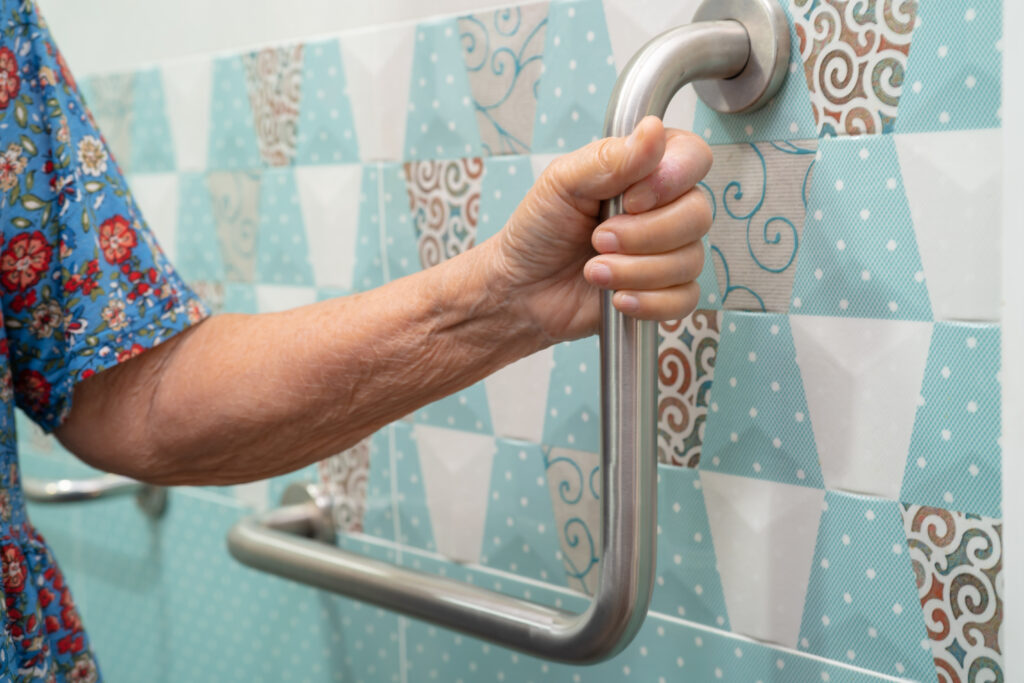
The bathroom is where most aging-in-place work starts, and for good reason. Wet floors, a high tub wall, and a low toilet are a hard combination. A towel bar or a soap dish is not a handhold, even though people grab them every day. A properly mounted grab bar by the toilet, at the tub or shower entry, and on the shower wall gives you something that will hold your weight when your feet slip. Placement matters as much as the bar itself, so we look at how you get in and out before deciding where each one goes.
Most of the trouble spots in a home show up after dark: the step down into the sunken living room, the rug that curls at the corner, the trip to the bathroom at 2 a.m. Walk your usual nighttime route once with the lights low and note every place you reach for a wall or a doorframe. That list is a better starting point than any generic checklist, including ours.
Stairs, steps, and the way in from the garage or deck
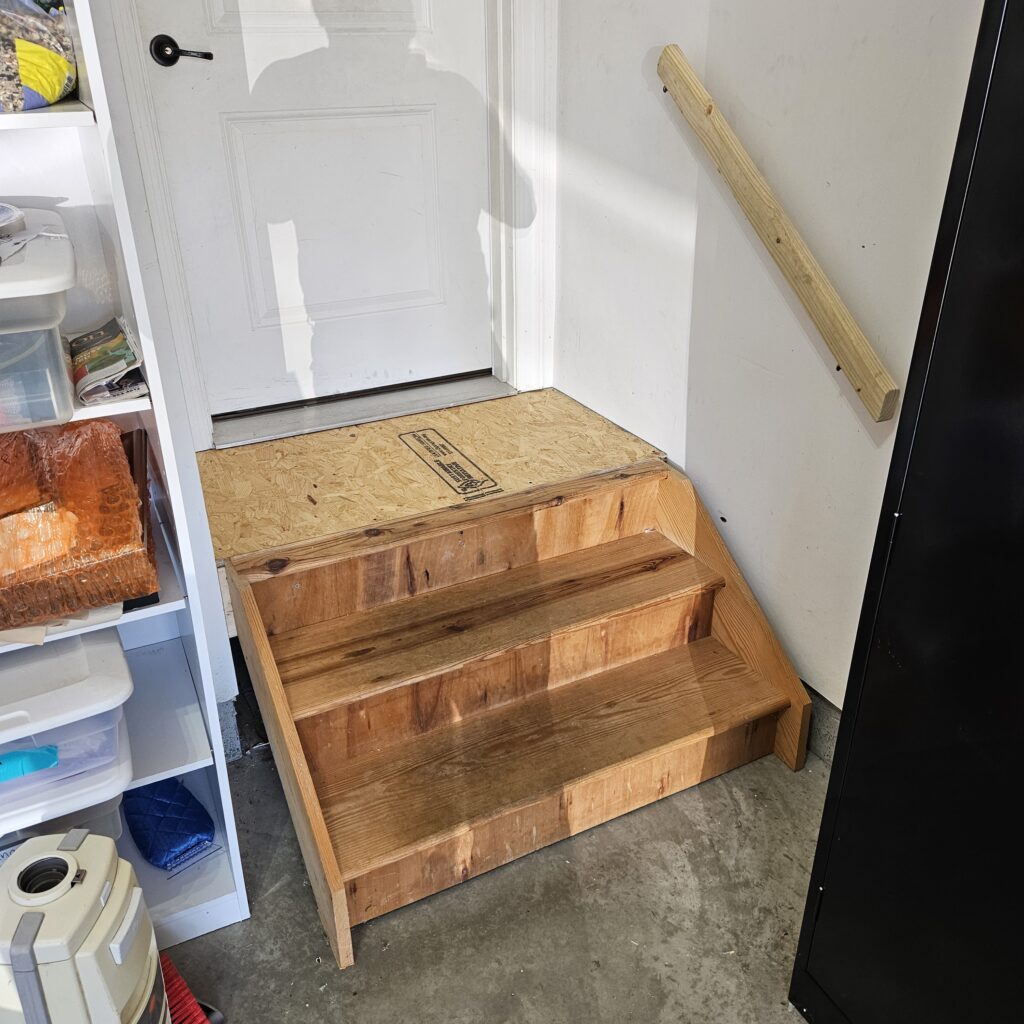
A lot of homes in coastal Delaware have a step or two between the garage floor and the house door, and often there is nothing to hold onto. That single step gets harder every year, especially with groceries in your hands. A sturdy set of steps with a wide landing at the door and a solid handrail on the wall is a small project that makes the entrance you use most a lot safer. It is classic carpentry work, built to fit the space you have.
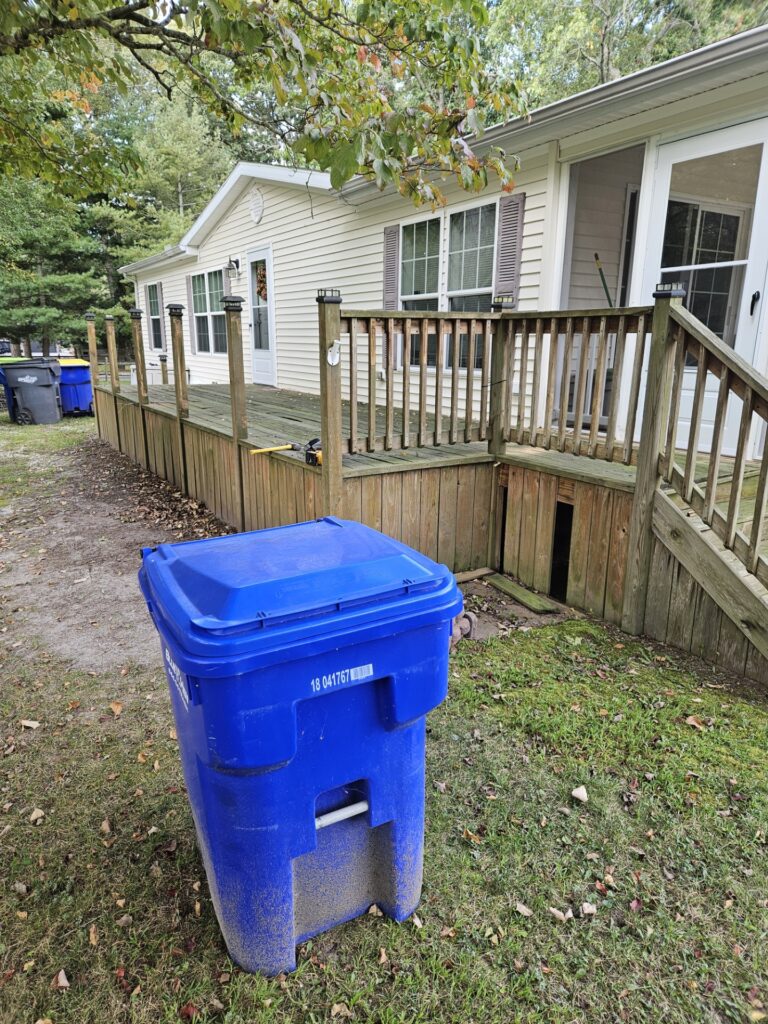
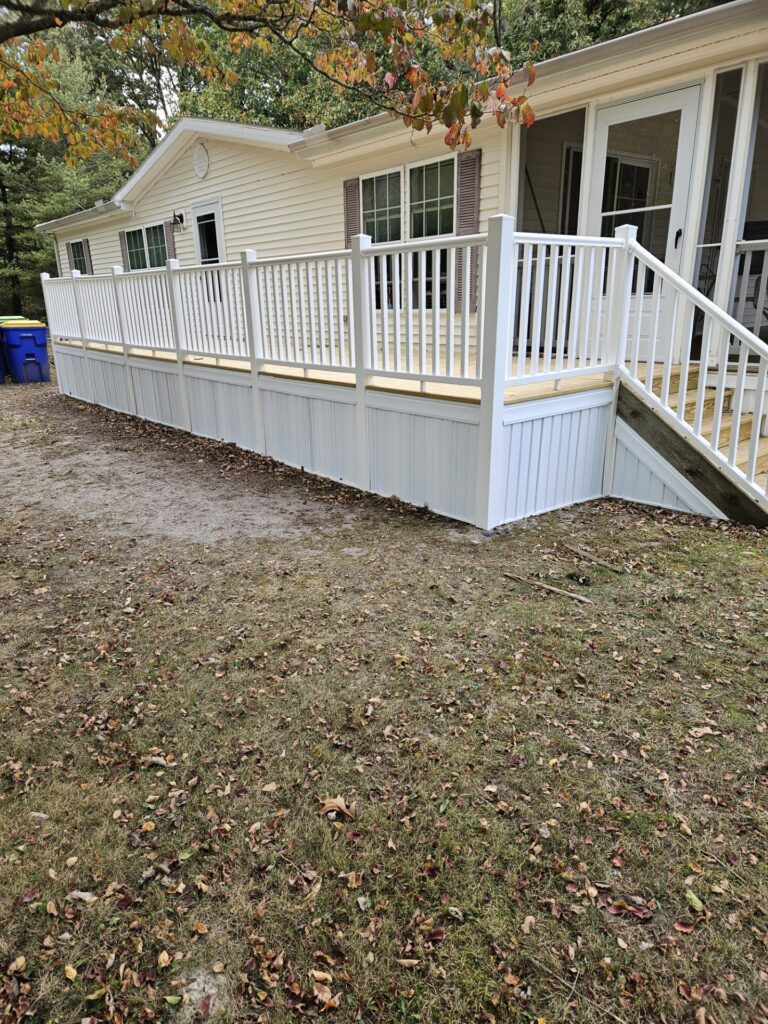
Back decks and porch steps deserve the same attention. Salt air and coastal weather are hard on wood, and a deck that looked fine five years ago can have soft boards, wobbly spindles, and a stair rail that moves when you lean on it. Those are not cosmetic problems for someone who is less steady on their feet. Solid boards, tight railings, and a full handrail on the stairs turn the back porch back into a place you can use without worrying.
Floors and hallways: smooth, level, and nothing to catch a foot
Floors cause more trouble than most people expect. Throw rugs that slide, carpet that has stretched and rippled, raised thresholds between rooms, and old tile with cracked or lifted pieces all catch a shuffling foot or a walker wheel. Replacing a patchwork of surfaces with one continuous floor removes most of those edges at once. Vinyl plank flooring is a practical choice here: it is durable, water-resistant, comfortable underfoot, and it can run from room to room without a lip at every doorway.
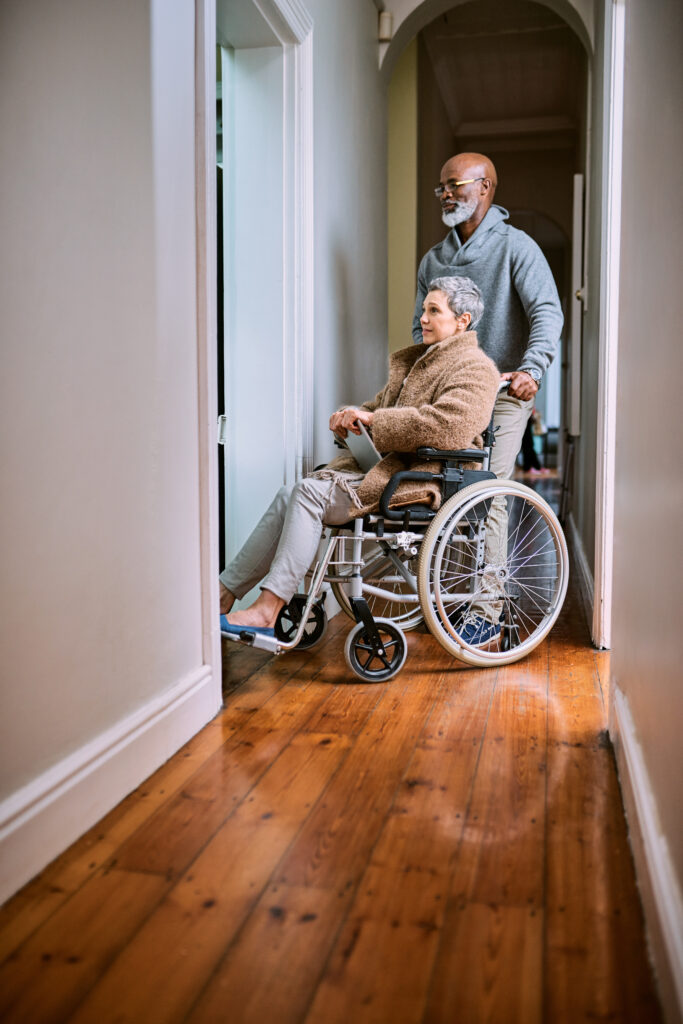
Kitchen storage, walls, and everyday reach
If the everyday dishes live on the top shelf, sooner or later someone is going to climb on a chair to get them. Rethinking storage so the things you use daily sit between hip and shoulder height is one of the most effective changes you can make. Custom cabinets let us build storage around how you actually cook and live, rather than forcing you to fit a standard box.
Two smaller items round out most plans. Fresh interior paint in lighter colors, with trim that contrasts with the walls, makes doorways and edges easier to see. And a wall-mounted TV at a comfortable viewing height gets the stand, and the tangle of cords behind it, off the floor and out of the walking path.
Signs it's time to make changes
The house is already asking for help. These are worth acting on now.
What we look for
- You or a family member reach for the towel bar or the sink to sit down or stand up.
- Someone has already stumbled on the garage step, a rug edge, or the deck stairs.
- The everyday dishes or pots need a step stool or a chair to reach.
- A handrail on the stairs or deck moves when you put weight on it.
Signs a small fix will do
The house mostly works. A few targeted changes keep it that way.
What keeps it simple
- The floors are already level and continuous, with only a rug or two to remove.
- Stairs have railings, and they are solid when you lean on them.
- The bathroom layout works; it just needs a grab bar or two in the right spots.
- Storage is mostly reachable, with only a shelf or two to rearrange.
Choosing who does the work
Aging-in-place work is only as good as the installation. A grab bar that pulls out of the wall or a handrail that shifts under your hand is worse than none at all, because you trust it. That is why the questions you ask before you hire matter. We wrote a full guide on how to hire a handyman, but two questions matter most here.
There are a lot of people in this industry who are not properly registered or insured. Before anyone works on your home, ask whether they are a registered company and whether they carry insurance. Then ask whether they have done this specific type of work before. Changing a lightbulb takes no special skill; anchoring a grab bar that has to hold a person's full weight, or building a set of steps, is a different job, and it is fair to ask for an honest answer.
“We treat your home as though it were our own. If we wouldn’t be satisfied with someone doing the same work in our home, we won’t leave yours that way.”— AEB Services, Inc.
The decision matrix
Not everything has to happen at once. Read down the left column, find the conditions that match your home, and see whether each one is a quick fix you can knock out now or a project worth planning. Most homes have a few of each, and the quick fixes are usually the place to start.
| If your home… | Quick fix | Planned project |
|---|---|---|
| Has no grab bars in the bathroom | Yes, start here | Not needed |
| Has a garage step with no railing | Handrail first | Custom steps |
| Has a deck rail that wobbles | If it's one section | If the deck is worn |
| Has throw rugs in the hallway | Take them up | Overkill |
| Has mixed floors with raised thresholds | Edges remain | New flooring |
| Keeps daily items on high shelves | Rearrange for now | Custom cabinets |
| Has TV cords across the floor | Mount the TV | Not needed |
The bottom line
Staying in the home you love is mostly about removing the small daily hazards before they turn into a fall. Handholds in the bathroom, solid rails on every set of steps, smooth floors without edges to catch a foot, and storage you can reach without a step stool cover most of what an aging-in-place plan needs. Larger projects can follow on your own schedule.
If you are not sure where your home stands, that is what a walkthrough is for. We talk through what you want, set up a time to come look, and give you a quote, typically free. Our handyman services cover the quick fixes, and our carpentry, cabinet, flooring, and painting work covers the bigger ones, so one company can handle the whole list. When you are ready, tell us what you need through our contact form.