
Home Modifications to Prevent Senior Falls
On this page · 10 sections
More and more of the calls we get around Millsboro and the rest of Sussex County come from older homeowners, or from their grown kids, and the conversation usually starts after a near miss. A slip stepping out of the tub. A stumble on the step up from the garage. A rug corner that caught a slipper on the way to the kitchen at night. Nobody got hurt this time, and they want to keep it that way.
The good news is that most of the changes that make a home safer for an aging body are small, practical, and quick. Some you can do yourself this weekend. Others are worth having done right, because a grab bar that pulls out of the wall is worse than no grab bar at all. Here's how we think it through, one part of the house at a time.
The short answer
Bottom Line Up Front
Start with the bathroom and the paths used every day. Remove throw rugs, light the route to the bathroom, and get cords off the floor yourself. Then have grab bars, handrails, and worn or uneven floors handled properly, because anything that has to hold a person's weight has to be done right.
Most falls at home happen in ordinary places doing ordinary things: getting out of the shower, stepping up from the garage, walking to the bathroom in the dark. That's good news, because those spots are easy to find and most of them are inexpensive to fix. The trick is knowing which fixes are a weekend chore and which ones belong to someone who will anchor them so they hold.
The rest of this post walks through the bathroom, the floors, the stairs and steps, and the everyday paths through the house, with a decision table at the end to help you sort the weekend fixes from the jobs worth handing off.
Start with the bathroom
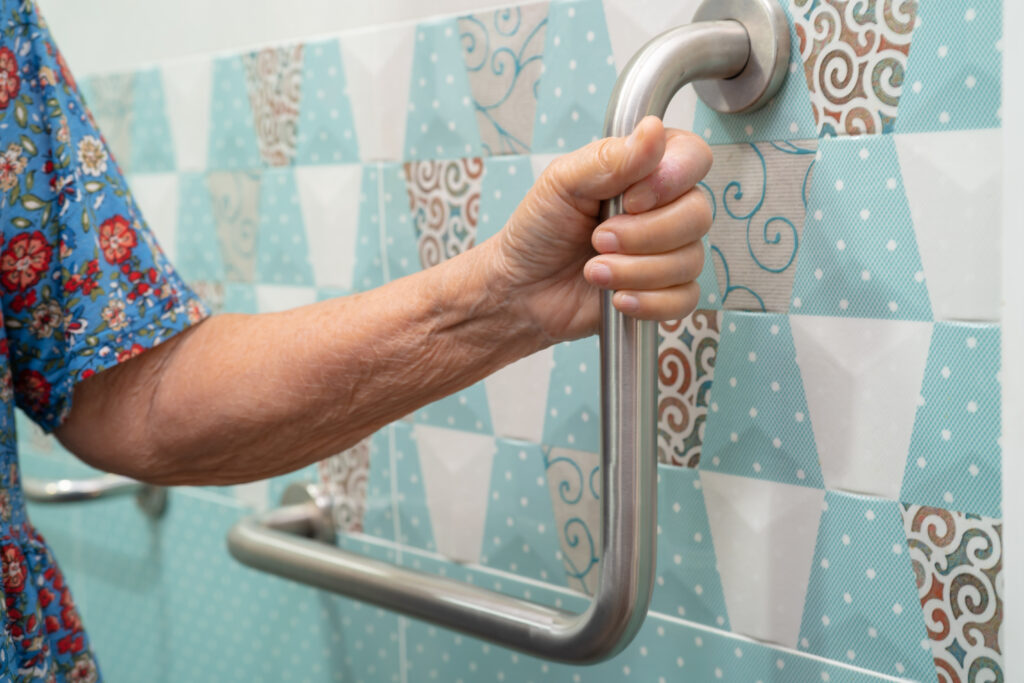
The bathroom puts hard, wet surfaces together with a lot of standing up, sitting down, and stepping over things, which is why it's the first room we look at. The most useful change is a properly mounted grab bar: one beside the toilet, one inside the tub or shower, and often one right at the entry where you step in and out. Placement matters as much as the bar itself. It should sit where the person actually reaches when they're getting up, not wherever the wall happened to be convenient.
A grab bar has one job, holding a person's full weight at the worst possible moment, so how it's anchored is the whole point. That's the kind of detail we take care of as part of our handyman work, along with the smaller bathroom fixes that tend to come up in the same visit.
People grab whatever is closest when they lose their balance, and in a bathroom that is usually the towel bar or the soap dish. Neither one is built to hold body weight. If someone in the house already uses the towel bar to steady themselves, that's a sign a real grab bar belongs in that exact spot.
Floors: where trip hazards hide in plain sight
Most trips don't happen on stairs. They happen on the flat: a throw rug that slides, a carpet edge that's started to curl, a cracked tile that sits a little proud of its neighbors, or a raised threshold between two rooms. Walk the paths that get used every day, especially bedroom to bathroom and living room to kitchen, and look down. Anything that would catch a shuffling foot is a candidate for fixing.
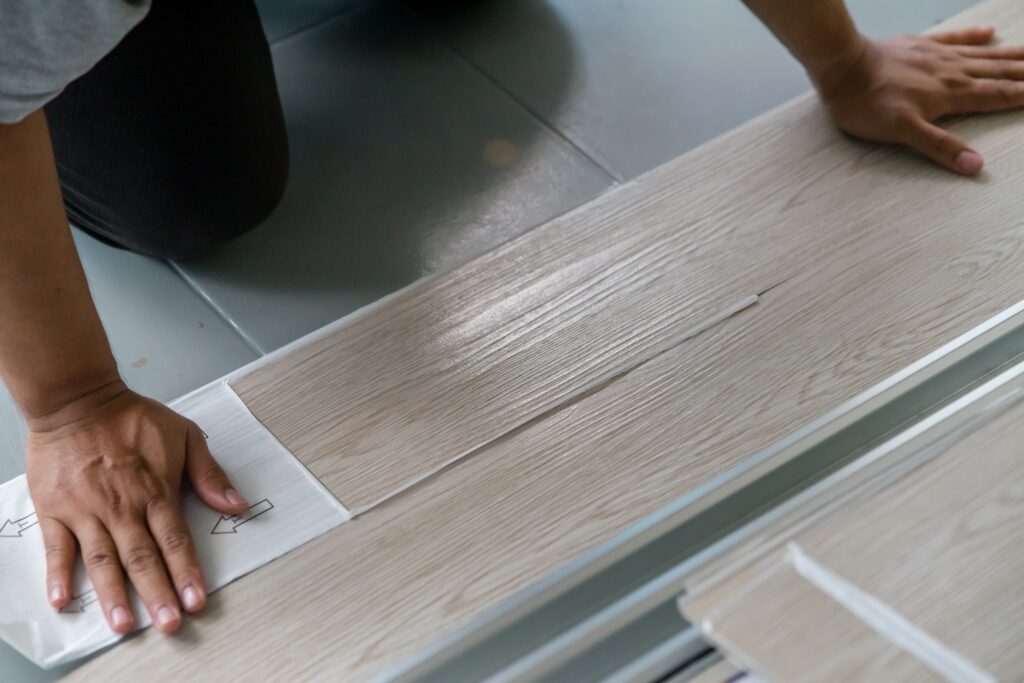
Removing throw rugs is free and immediate. When the floor itself is the problem, replacing worn carpet or broken tile with one continuous surface can take a whole category of trip hazards off the table. That's a big reason we install so much vinyl plank flooring in homes where someone is planning to stay for the long haul: it's durable, water-resistant, and it can run from room to room without a lip at every doorway.
Stairs, steps, and the entry nobody thinks about
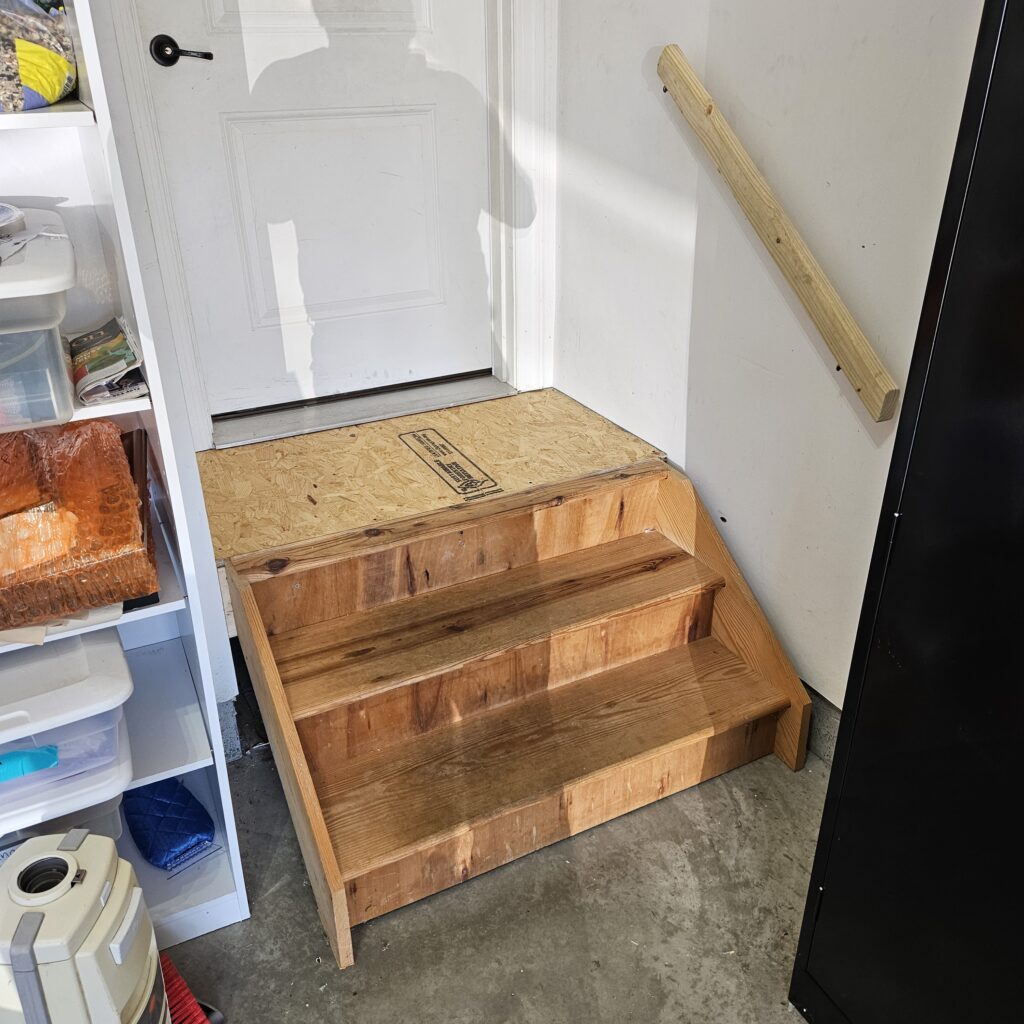
Inside stairs get attention because everyone knows they're risky. A handrail on both sides, treads that don't wobble, and steps kept clear of the pile of things waiting to go up all make a real difference. The step people forget is the one between the garage and the house. It's often a single high step, sometimes onto a narrow threshold, usually with arms full of groceries, and often with no rail at all.
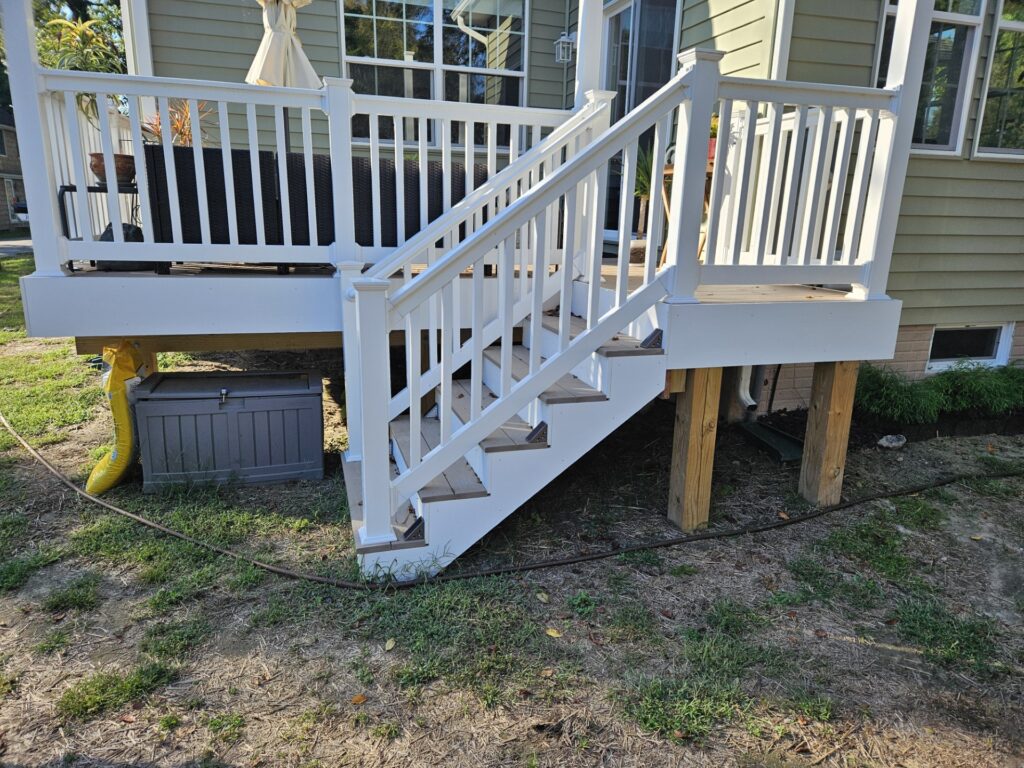
Outside, the same rules apply to porch and deck stairs. Boards that have split or gone slick with mildew, a loose railing, or treads that flex underfoot are worth fixing before winter. Steps, rails, and landings like these fall under our carpentry and trim work.
Quick fix or lasting fix, room by room
Not every hazard needs a contractor. This table pairs the quick fix you can do yourself with the longer-lasting version, and marks which one is usually the right answer for that spot.
| Where | Quick fix | Lasting fix |
|---|---|---|
| Bathroom | Non-slip mat in the tub | Grab bars mounted where you reach |
| Throw rugs | Pick them up and put them away | Nothing more needed |
| Worn or uneven floors | Tape down lifted edges | One continuous vinyl plank floor |
| Night lighting | Plug-in night lights along the route | Same, done the same night |
| Inside stairs | Keep every step clear | Handrails on both sides, solid treads |
| Garage entry | Keep a light on in the garage | A sturdy step and landing with a rail |
| TV corner cords | Run cords along the wall | Mount the TV, keep cords off the floor |
| High kitchen shelves | Move daily items to middle shelves | Cabinets built for reachable storage |
Turn the lights off, then walk from the bed to the bathroom the way you would at 2 a.m. Notice where you reach for the wall, where you can't see the floor, and where a rug or a cord sits in the path. That one walk will show you more about where to start than any checklist.
Should you do it yourself or call someone in?
Plenty of fall prevention is housekeeping, and you should absolutely do that part yourself. The line is anything that has to hold weight or change the floor or the stairs. Those are the jobs where a shortcut fails at exactly the moment it's needed.
Handle it yourself
Housekeeping fixes that cost little and take an afternoon. Do these first.
Good weekend jobs
- Throw rugs and bath mats that slide when you push them with your foot.
- Cords that cross a walkway between a lamp, a TV, and the outlet.
- A dark stretch between the bedroom and the bathroom with no night light.
- Shoes, boxes, or laundry stacked on the stairs waiting to go up.
Call someone in
Anything that has to hold weight or changes the floor or the steps. A shortcut here fails when it matters most.
Worth having done right
- Someone already steadies themselves on a towel bar, sink, or door frame.
- Stairs or porch steps with a rail on one side only, or none at all.
- Carpet edges, loose tiles, or thresholds that catch a foot between rooms.
- A tall single step between the garage and the house with nothing to hold.
Clear the everyday paths
Cords are one of the most common trip hazards we see, and the TV corner is usually where they gather. Mounting the TV on the wall and keeping its cords off the floor takes away a tangle that sits right where people walk. It's one of the reasons homeowners call us for TV mounting, even when the TV stand was working fine.
The kitchen has its own version of the problem: the step stool. Every time someone climbs up to reach a high shelf, that's a fall waiting for a bad day. Moving everyday dishes to the middle shelves costs nothing. If the cabinets themselves don't work for the way you live now, custom cabinets can put storage at a height you can reach from the floor.
“We treat your home as though it were our own. If we wouldn’t be satisfied with that work in our home, we won’t leave yours that way.”— AEB Services, Inc.
Plan for the next ten years, not just today
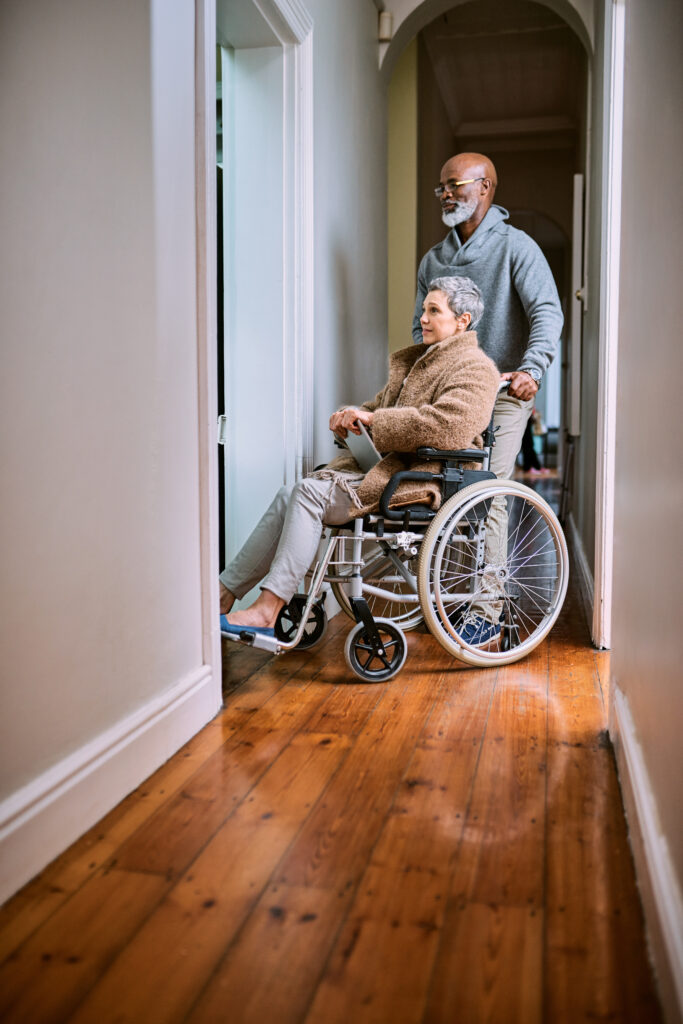
If you're making changes anyway, it's worth thinking about what the house will need later, not just what it needs this month. A walker or a wheelchair needs smooth, level floors and room to turn. A bathroom that works for one person may need to work for a caregiver too. We cover the bigger picture in our post on aging-in-place modifications, and it's a good next read once the urgent fixes are done.
The decision table
If you only do one thing with this post, go through this table. Read down the left column, check off what you see in your own home, and look at which side each row lands on.
| If you notice… | Weekend fix | Call us |
|---|---|---|
| a throw rug that slides underfoot | Yes, remove it | Not needed |
| a dark path to the bathroom | Yes, night lights | Not needed |
| someone leaning on the towel bar | Not built for it | Yes, grab bar |
| a curling carpet edge or loose tile | Tape buys time | Yes, new floor |
| steps with a rail on one side or none | No | Yes, add rails |
| a tall step up from the garage | Light it for now | Yes, step and rail |
| cords across the TV corner | Reroute them | If mounting the TV |
| a step stool used for daily dishes | Move the dishes | If cabinets don't work |
The bottom line
Most homes don't need a remodel to be safer. They need the rugs gone, the paths lit, the cords off the floor, and a handful of solid fixes in the places that matter most: grab bars in the bathroom, rails on every set of steps, and floors without lips and loose edges. Do the easy part this weekend, and get the weight-bearing part done properly.
When you're ready for help, the way we work is simple. We talk through what you need, set up a time to come look at the house, and give you a quote, and our estimates are typically free. You can start that conversation through our contact form, or see everything we handle on our handyman services page.