

How to make small spaces feel bigger
On this page · 9 sections
A lot of the rooms we walk into around Sussex County aren't actually too small. They're crowded. A dark wall color stops the eye short, a TV stand eats a corner, three kinds of flooring chop one open area into pieces, and a heater, a doorway, or a pile of storage bins makes every wall look busy. Knock a few of those out and the same square footage feels like a different room.
You don't need to move walls to get there. Most of the difference comes from four things: the color and finish on the walls, how the floor runs, how much of your stuff lives on the floor instead of in the walls, and whether the edges of the room look finished or cluttered. Here's how we think about each one, and where the line falls between a weekend of paint and a job for a carpenter.
The short answer
The Short Version
If the room feels small but works fine, start with light paint, matching trim, and one continuous floor. If it feels small because there's nowhere to put things, the fix is built-in cabinets, shelves, and a wall-mounted TV that get your stuff off the floor.
Paint and flooring change how big a room looks. Carpentry and cabinets change how much of the room you can actually use. A lot of small spaces need both, but knowing which problem you have first saves you from painting a room that's really crying out for storage, or building storage in a room a good color would have fixed.
The rest of this post walks through each of those moves, compares the quick fixes with the built-in ones, and ends with a decision matrix you can check your own room against.
Start with paint: color, finish, and where it stops
Paint is the cheapest square footage you'll ever buy. Lighter colors bounce more daylight around a room, so the walls seem to sit farther away. But it's not just about going white. A soft, light color carried across the walls, the trim, and even the ceiling blurs the corners where one surface meets the next, and corners are what tell your eye how big a room is. If you're stuck between shades, our guide to how paint colors affect mood is a good place to start.
Where the paint stops matters as much as the color. A bright white ceiling over a darker wall draws a hard line around the top of the room. Pulling the wall color up onto the ceiling, or tinting the ceiling a few shades lighter than the walls, softens that line and makes a low ceiling feel taller. That kind of detail is most of what we're doing on an interior painting job in a small room: clean lines, even coverage, and colors that run where they should.

Contrasting trim outlines every door, window, and baseboard, which is great in a big room and busy in a small one. Painting the trim the same color as the walls, in a slightly glossier finish, keeps the detail but stops it from boxing the room in. It's one of the quickest ways to make a narrow hallway or a small bedroom feel wider.
Let the floor run without breaks
Every time the flooring changes, your eye reads a new room. Carpet in the living room, tile in the kitchen, and laminate in the hall turn one open area into three small ones. Running a single floor through connected rooms does the opposite: it stretches the space out and lets the room read as one piece. Lighter, wider planks help too, and they lay down in long lines that pull your eye across the room.
That's a big reason we like vinyl plank flooring for small homes. It can run from the entry through the kitchen and into the living room without changing material at the doorways, and it holds up in the busiest parts of the house. We go into the durability side in why vinyl plank works so well in high-traffic areas.
Get things off the floor and into the walls
Floor space you can see is what makes a room feel big. Freestanding bookcases, cabinets, and storage bins all stand on it. Built-ins move that storage into the wall, so it takes up less depth, lines up flush with the room, and stops looking like furniture parked against a wall. A set of custom cabinets or built-in shelves can be sized to the inch, which matters most in exactly the awkward spots small homes have the most of: beside a window, under a stair, at the end of a hall.
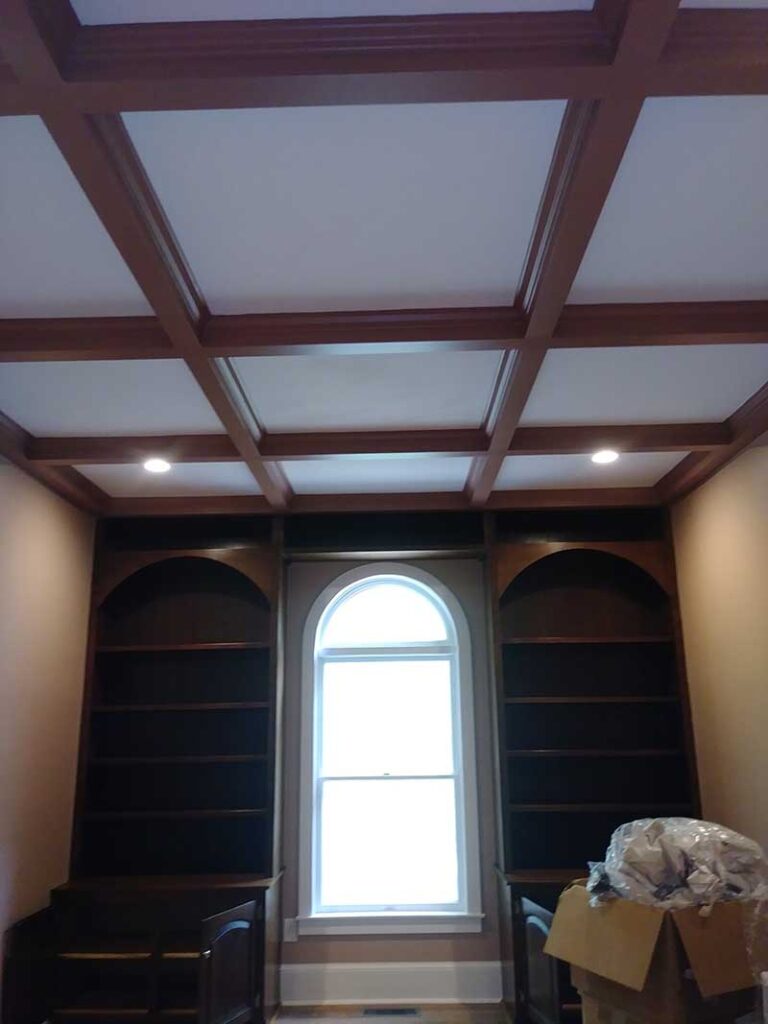
The TV is the other big floor-eater. A media stand or entertainment center can swallow a whole corner of a small living room. Getting the TV onto the wall frees that corner up, and with the cables routed cleanly it stops being the busiest thing in the room. Our TV mounting work is often the cheapest way to get a few feet of floor back. And if closets and pantries are where your space is disappearing, our post on custom closets, pantries, and built-ins covers that side.
Quick fixes vs. built-in fixes at a glance
Some small-room problems are solved with paint and a drill. Others need carpentry. This is the comparison we'd walk you through standing in the room. The highlighted cell is the smarter call when that row is the one driving your decision.
| Factor | Paint, Floors & Mounting | Built-Ins & Carpentry |
|---|---|---|
| What it changes | How big the room looks | How much of the room you can use |
| Best for | Dark, choppy, or busy rooms | Cluttered rooms with no storage |
| Disruption | Light, room stays mostly usable | More, carpentry happens in the room |
| Relative cost | Lower | Higher |
| Floor space gained | Some, from mounting the TV | The most, storage moves into the wall |
| Awkward nooks and corners | Painted, but still empty | Built to fit and put to work |
| Changing your mind later | Easy to repaint | Built in for the long haul |
Signs paint and floors will do it
The room has enough storage. It just looks closed in.
What we look for
- The walls are a dark or heavy color and the room still looks dim on a sunny afternoon.
- Contrasting trim outlines every door, window, and baseboard in the room.
- Two or three different floors meet within a few steps of each other.
- Everything you own already has a place, and the floor is mostly clear.
Signs it needs built-ins or carpentry
The room is small because it's full. Moving storage into the walls is the fix.
What changes the answer
- Bookcases, bins, or a media stand sit along most of the walls.
- There's an awkward nook beside a window, under a stair, or at the end of a hall that nothing fits.
- A wall or a small doorway blocks the view to the next room.
- A heater, a damaged casing, or worn trim draws the eye to the edges of the room.
Open up the sight lines
A room feels as big as the farthest point you can see from the doorway. If you can see through to the next room, past the kitchen into the living room or down a hall to a window, the space borrows that extra depth. Sometimes that's as simple as moving a tall piece of furniture out of the line of sight. Sometimes it means opening a pass-through between two rooms so the kitchen and the living area share light and air.
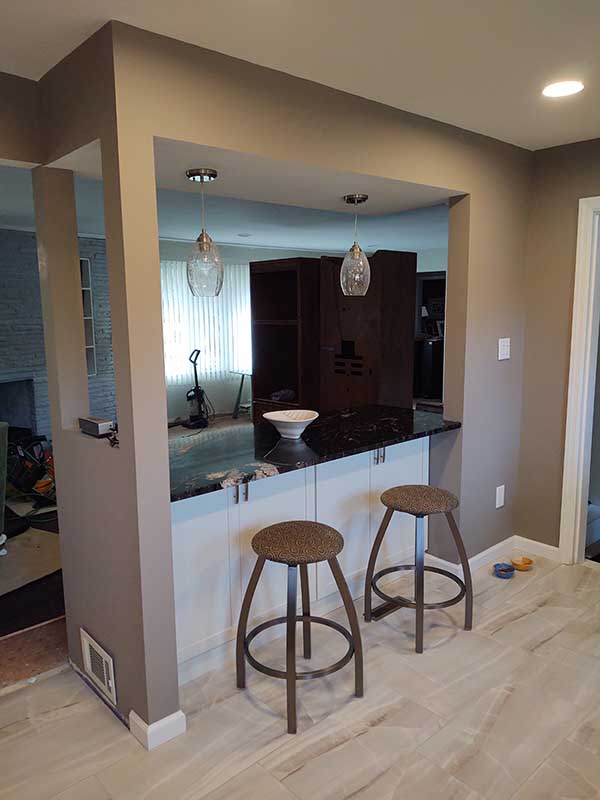
Opening a wall or widening a doorway is real carpentry, and some walls are carrying weight you can't see. Before anyone cuts into one, make sure you're hiring a legal company: properly registered and insured. Then ask the question that matters: have you done this type of work before? Swapping a light bulb takes no special skill. Framing and finishing a new opening in a wall that holds up your house does.
Trim and details that tidy the edges
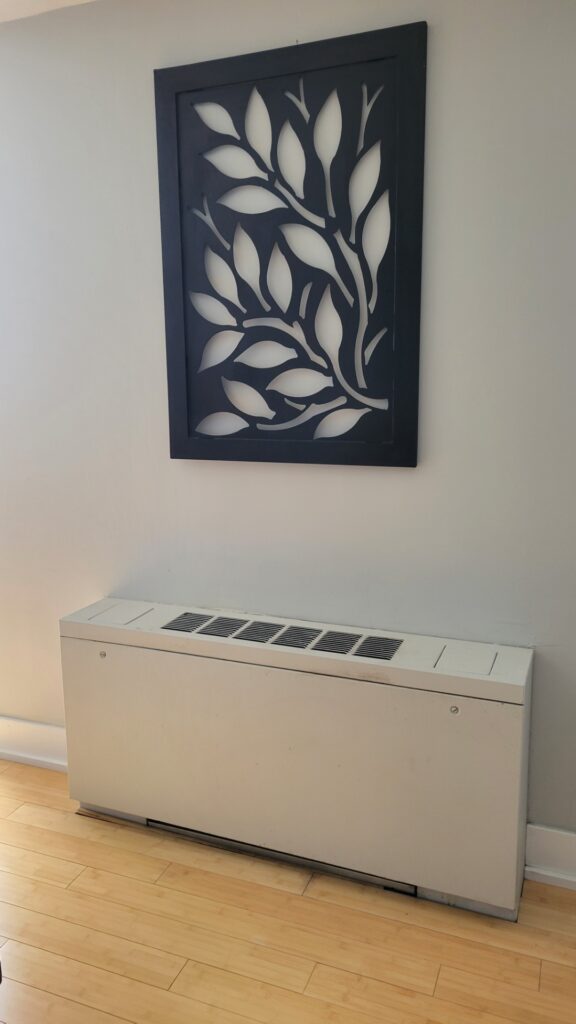
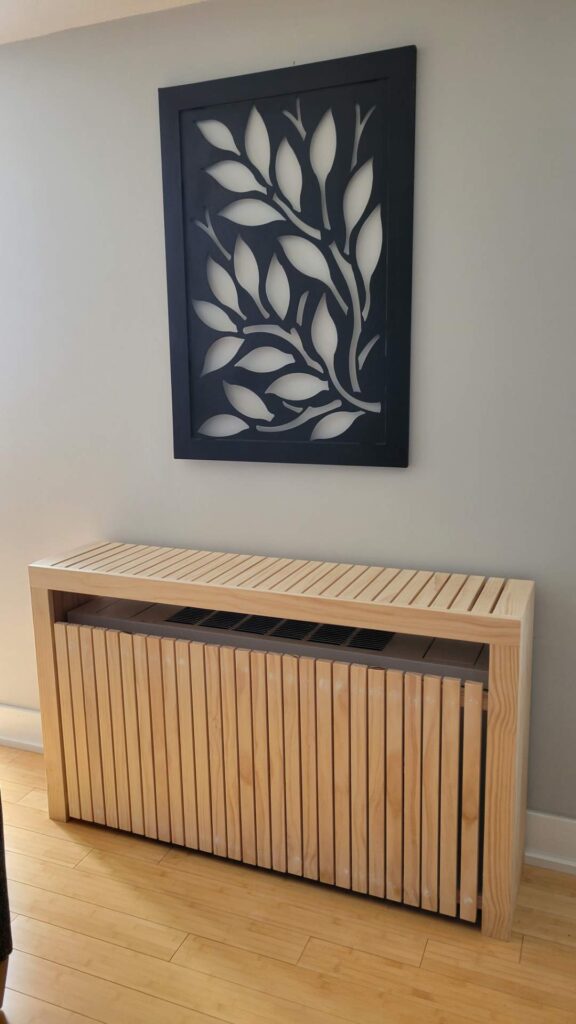
Small rooms show every rough edge. A gap at the baseboard, a dented door casing, or a rusty heater cover pulls the eye to the perimeter and makes the room feel cramped and unfinished. Clean, simple carpentry and trim work does the opposite: crisp baseboards, tidy window casings, and crown molding that's painted to blend in let the walls read as smooth, continuous planes. If your trim is overdue, our post on updating trim work walks through the options.
The same goes for the eyesores every small room seems to have. Drag the divider below to see a wall heater before and after we built a cover around it.
“We treat your home as though it were our own. If we wouldn’t be satisfied with the work in our own house, we won’t leave yours that way.”— AEB Services, Inc.
The decision matrix
If you only use one thing from this post, use this table. Find the rows that describe your room, then see which column wins. Most rooms hit more than one row, and plenty of small spaces need a little of both.
| If your room… | Paint & Floors | Built-Ins & Trim |
|---|---|---|
| Looks dim even in daylight | Yes | Won't fix it |
| Has three floors in one open area | Yes — run one floor | No |
| Has furniture along most walls | Helps a little | Yes |
| Has a TV stand taking a corner | Mount the TV | If adding a media wall |
| Has a nook nothing fits | Still empty | Yes — build to fit |
| Has worn or busy trim | If it's sound | If it's damaged |
| Is blocked by a wall from the next room | No | After a careful look |
The bottom line
Most small rooms don't need more square feet. They need fewer things fighting for attention. Lighter paint that runs past the corners, one floor instead of three, storage and screens moved into the walls, and edges that look finished will make almost any room feel bigger, and you can do them one at a time as your budget allows.
If you're not sure where to start, that's what an estimate is for. Tell us what's bothering you about the room, we'll set up a time to come take a look, and you'll get a quote, typically free. Whether the answer is a few gallons of paint or a wall of custom cabinets, we'll tell you honestly which one your room actually needs. Want to see what that looks like in real homes? Browse our project gallery.